

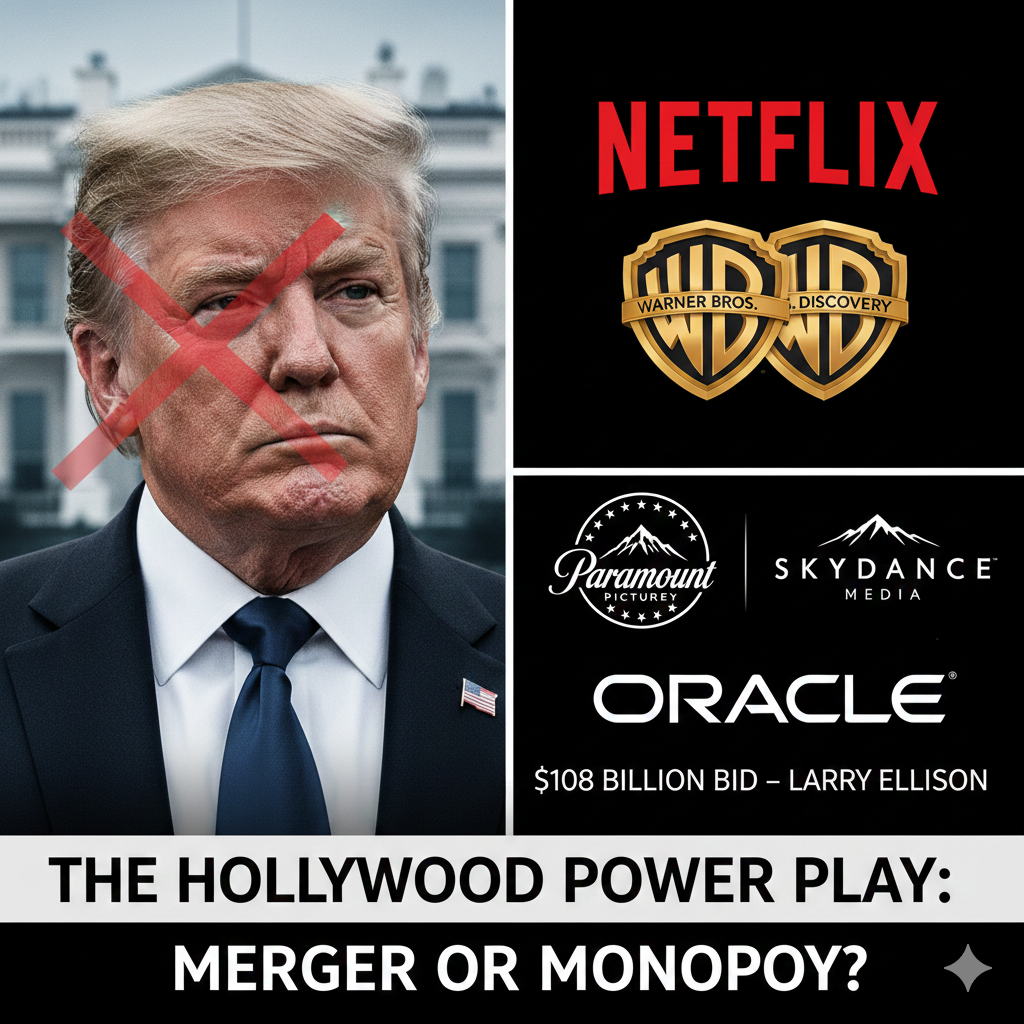
The battle for the soul of Hollywood has moved from the studio lots to the Oval Office. As Netflix (NFLX) moves to finalize its staggering $82.7 billion acquisition of Warner Bros. Discovery (WBD) assets, a massive political and financial hurdle has emerged.
President Donald Trump recently hinted that the deal’s “very big market share” could be a problem, sparking a debate on whether a Netflix-WBD monopoly would crush competition. On a recent episode of Market Catalysts, Wedbush Securities Managing Director Michael Pachter sat down with Yahoo Finance to explain why a Trump intervention might actually be the “right thing to do.”
The $108 Billion Counter-Offer: Enter Paramount-Skydance
While the WBD board has leaned toward Netflix for its “deal certainty,” a rival bidder is making it impossible to ignore the alternatives. Paramount-Skydance (PSKY), backed by a personal $40 billion guarantee from Oracle CEO Larry Ellison, has launched a hostile $108 billion bid.
Key highlights of the rival offers:
-
Netflix Bid: $82.7 Billion (Focused on Streaming & Studios).
-
Paramount-Skydance Bid: $108.4 Billion (All-cash offer for the entirety of WBD).
-
The Conflict: WBD’s board currently favors Netflix, despite the lower price, citing fewer regulatory risks—a claim analysts like Pachter are now questioning.
Why Trump Might Block the Netflix Deal
President Trump’s involvement isn’t just speculation; he has publicly stated he would “be involved” in the approval process. Analysts suggest several reasons why the administration might favor the Paramount bid over Netflix:
-
Market Concentration: A combined Netflix and HBO Max would control over 35% of the U.S. streaming market, dwarfing Disney+ and Amazon Prime. Pachter notes that this “concentration of assets” gives one company too much pricing power.
-
The “Theatrical” Argument: Netflix has long been viewed as a threat to traditional cinemas. A Paramount takeover would likely preserve the theatrical model that WBD’s historic studios (like Warner Bros. Pictures) were built on.
-
The Ellison Factor: Larry Ellison, a prominent supporter of Trump, is the primary financial engine behind the Paramount bid. This political alignment could make the Paramount deal appear more favorable to the current administration.
Michael Pachter: “Zero Chance” of Closing?
Michael Pachter has been vocal about the Netflix deal’s survival. According to Pachter, the DOJ and FTC are likely to view the Netflix-WBD merger as a monopolistic threat.
“I would give the deal zero chance of going through unless Netflix agrees to operate HBO Max completely separately,” Pachter told media outlets.
He argues that for the “public good” and to protect consumer pricing, the government must step in. Blocking Netflix doesn’t just stop a monopoly; it paves the way for the Paramount-Skydance deal, which offers WBD shareholders a higher cash value of $30 per share.
What’s Next for WBD Shareholders?
The clock is ticking. WBD investors have until January 21, 2026, to weigh the options. While the board fears a $2.8 billion breakup fee if they ditch Netflix, the $25 billion gap between the two offers makes the Paramount bid a “superior” financial choice on paper.
What to watch for:
-
DOJ Statements: Any formal signal from the Department of Justice regarding antitrust concerns.
-
WBD Board Meeting: Reports suggest the board will meet this week to reconsider the Larry Ellison-backed offer.
-
Netflix’s Response: Will Ted Sarandos increase the bid to maintain his lead?