




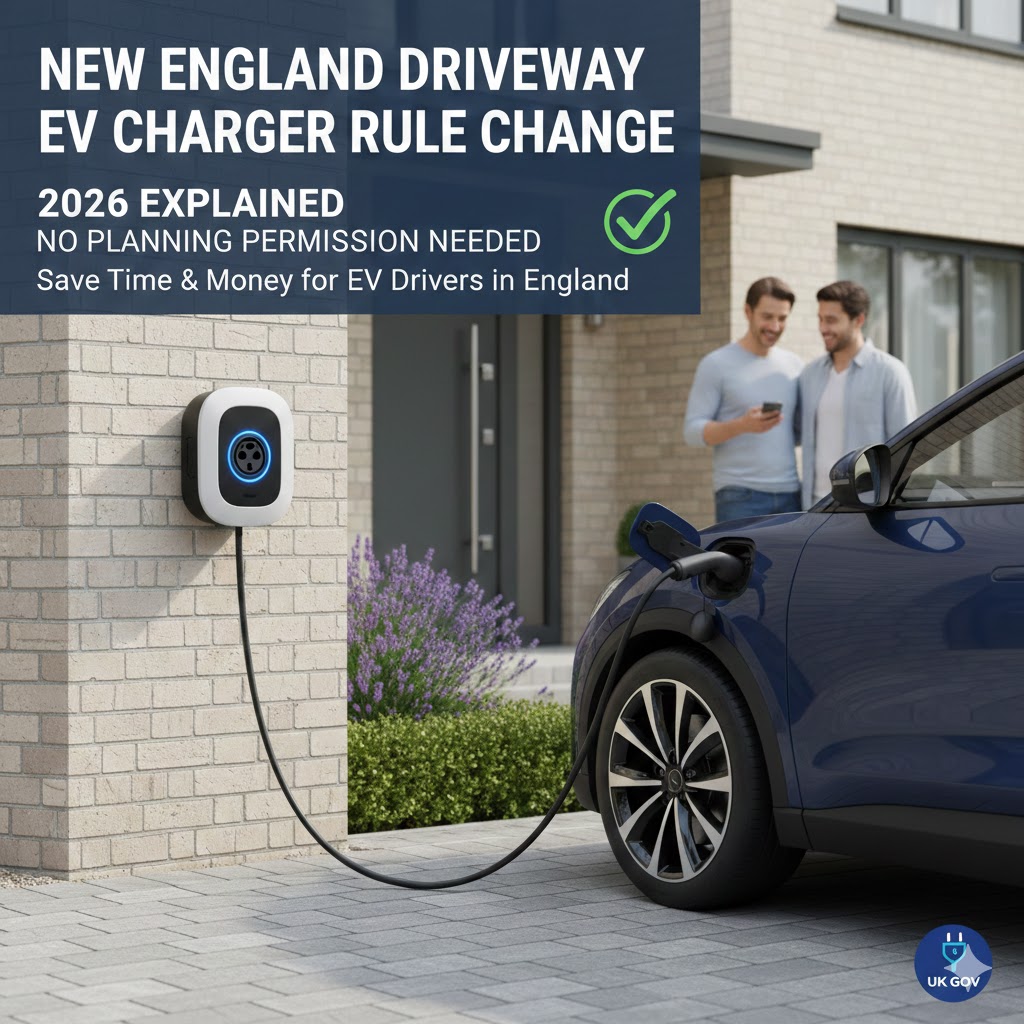
In 2026, a major change to EV charging regulations in England has transformed how homeowners install electric vehicle (EV) chargers on their driveways. This is part of the UK government’s broader effort to accelerate the transition to electric vehicles and expand charging infrastructure throughout the country.
What Is the New Driveway Rule Change?
Previously, many homeowners in England had to apply for planning permission just to install an EV charger, especially if their property fell within certain boundaries or near roads. This caused delays, higher costs, and bureaucratic hurdles — particularly for people without traditional driveways.
Under the 2025-2026 rule update, the government has made most small EV charger installations on driveways in England “permitted development” — meaning no planning permission is required as long as the charger adheres to size and placement regulations.
Key Benefits for Homeowners
1. No Planning Permission Needed
-
Homeowners can install wall-mounted or pedestal EV chargers on their driveway without seeking planning permission — significantly reducing time and administrative hassle.
2. Potential Cost Savings
-
By making home charging installations simpler and more accessible, drivers could save up to £1,100 per year compared with petrol or diesel vehicle running costs.
3. Faster Installation
-
Without permission applications, installations can be completed much quicker — days or weeks rather than months waiting on approvals.
Rules & Restrictions You Must Know
Although installation is easier, certain guidelines still apply:
Charger Size
-
Units must remain modest in size (typically under around 0.2 cubic metres for wall-mounted boxes).
Positioning Rules
-
Chargers should be placed safely — not obstructing public paths and safe distances from public roads still apply.
Property Limitations
-
Leasehold properties and shared driveways may have title-deed restrictions or require neighbour agreements.
Why This Change Matters (Backed by Government Intent)
This regulatory shift aligns with wider UK policy goals to promote EV adoption and net-zero targets:
Reduces Charging Inequality – Around 40% of UK homes lacked a driveway previously, making at-home charging difficult and costly.
Supports EV Transition – As the UK aims to phase out petrol and diesel car sales by 2030 and ensure all new cars are zero-emission by 2035, easier home charging plays a critical role.
Government Support – Grants and funds (often up to £350 or more) help households install chargers and pave the way for millions more to adopt electric vehicles.
Installation Tips (Practical Advice)
Choose an OZEV-Approved Installer
Ensure your installer is authorised under UK regulations to meet safety and compliance requirements.
Use Smart Chargers
UK rules require modern EV chargers to be smart — capable of scheduling and managing charging loads.
Check Local Conditions
Always confirm with your local council if you live in a conservation area or have unusual property restrictions, even if planning permission is typically not needed.
Important Notes
-
The rule applies only to England; Scotland, Wales and Northern Ireland may have different planning rules.
-
Some properties and estates with shared or restricted driveways could still require permission or agreements from neighbours.
Conclusion
The 2026 rule change in England marks a major step forward for EV owners and those planning to switch to electric. By removing planning permission for most driveway charger installations, the UK government has dramatically reduced barriers to home charging — saving time, encouraging EV adoption, and supporting national environmental goals.
For homeowners and EV advocates alike, this update brings long-awaited clarity and convenience to simpler, greener driving.
FAQs (Additional SEO Content)
Do I still need planning permission for any EV charger?
In most cases in England, no — as long as charger size and placement rules are met.
Is the rule change for renters and flats?
There are separate grant schemes for renters with on-street parking, but rule changes focus primarily on homeowners.
Does this apply outside England?
No — Wales and other parts of the UK have some different rules and may still require permission.