



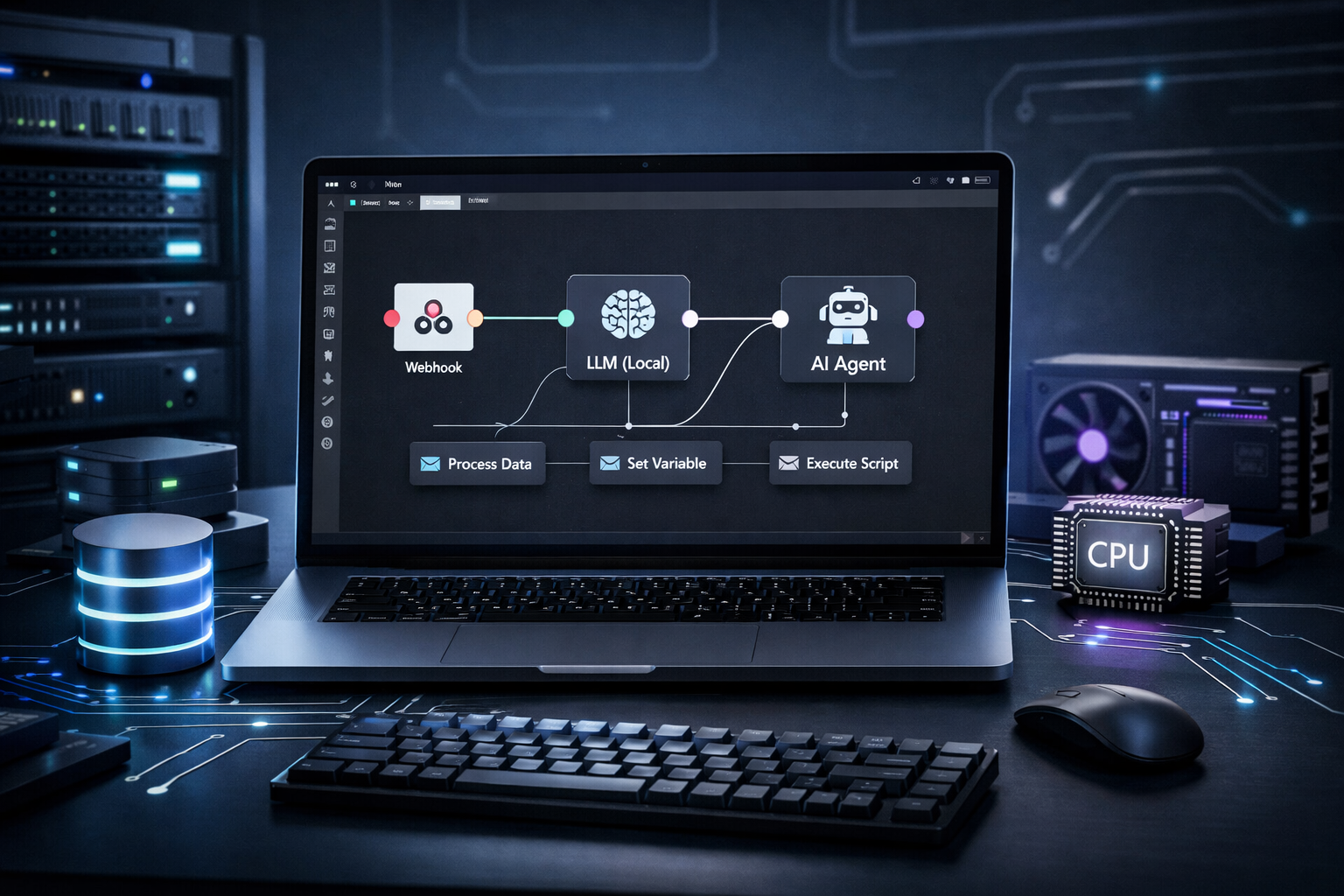
How to build n8n AI agents localls is becoming a hot topic for developers, automation experts, and AI enthusiasts who want full control over their data. Running AI agents locally using n8n allows you to create privacy-first automations without relying heavily on cloud-based AI tools.
In this guide, you’ll learn how to build n8n AI agents localls using open-source tools, local LLMs, and smart workflow design. By the end, you’ll have a scalable and secure AI automation setup running on your own system.
What Are n8n AI Agents?
n8n AI agents are automated workflows that can think, respond, and act using AI models. When you build them locally, you eliminate data leakage risks and gain faster response times.
Key benefits:
-
Full data privacy
-
No API usage limits
-
Cost-effective automation
-
Complete control over AI behavior
Why Build n8n AI Agents Localls?
Before diving into how to build n8n AI agents localls, it’s important to understand why local deployment matters.
-
Sensitive data stays on your machine
-
No dependency on third-party AI APIs
-
Works offline once configured
-
Ideal for enterprise and compliance-heavy projects
Prerequisites to Build n8n AI Agents Localls
To successfully follow how to build n8n AI agents localls, make sure you have:
-
A system with at least 16GB RAM (recommended)
-
Docker installed
-
Node.js (latest LTS)
-
Basic understanding of workflows and APIs
You can download n8n from the official website:
https://n8n.io (DoFollow)
Step-by-Step: How to Build n8n AI Agents Localls
Step 1: Install n8n Locally
Use Docker for a stable setup:
This launches n8n locally at http://localhost:5678.
Step 2: Set Up a Local LLM
To fully understand how to build n8n AI agents localls, you need a local AI model.
Popular options:
-
Ollama – https://ollama.ai
-
LM Studio – https://lmstudio.ai
These tools allow you to run models like LLaMA, Mistral, or Phi locally.
Step 3: Connect Local AI to n8n
Use the HTTP Request Node in n8n to send prompts to your local LLM API endpoint.
Example:
-
Method: POST
-
URL:
http://localhost:11434/api/generate
This step is critical in how to build n8n AI agents localls efficiently.
Step 4: Design AI Logic in n8n
Create workflows where the AI:
-
Reads user input
-
Analyzes context
-
Generates responses
-
Triggers actions (email, Slack, CRM updates)
This is where how to build n8n AI agents localls becomes truly powerful.
Step 5: Add Memory & Context
Use:
-
n8n Static Data
-
Local databases
-
Redis (optional)
This allows your AI agents to remember past conversations or decisions.
Step 6: Secure Your Local AI Agent
Security is essential when learning how to build n8n AI agents localls:
-
Enable authentication in n8n
-
Restrict local API access
-
Use HTTPS with reverse proxies
Step 7: Test and Optimize
Test multiple prompts, optimize workflows, and fine-tune your LLM settings for better accuracy and speed.
Common Use Cases for n8n AI Agents Localls
-
Automated customer support
-
Local document summarization
-
Internal business intelligence
-
SEO content workflows
-
Data processing without cloud exposure
If you’re working on automation-related content, you may also like our guide on AI workflow automation strategies (internal link).
Best Practices When Building n8n AI Agents Localls
-
Keep workflows modular
-
Log AI responses for debugging
-
Limit token usage
-
Regularly update your local models
Understanding how to build n8n AI agents localls properly ensures long-term scalability and performance.
Final Thoughts
Learning how to build n8n AI agents localls gives you a massive advantage in automation, privacy, and cost savings. With n8n and local LLMs, you can create enterprise-grade AI agents without depending on cloud-based services.
If you’re serious about AI automation, starting local is the smartest move.