


Why Did the Rupee Plunge Past ₹90?
-
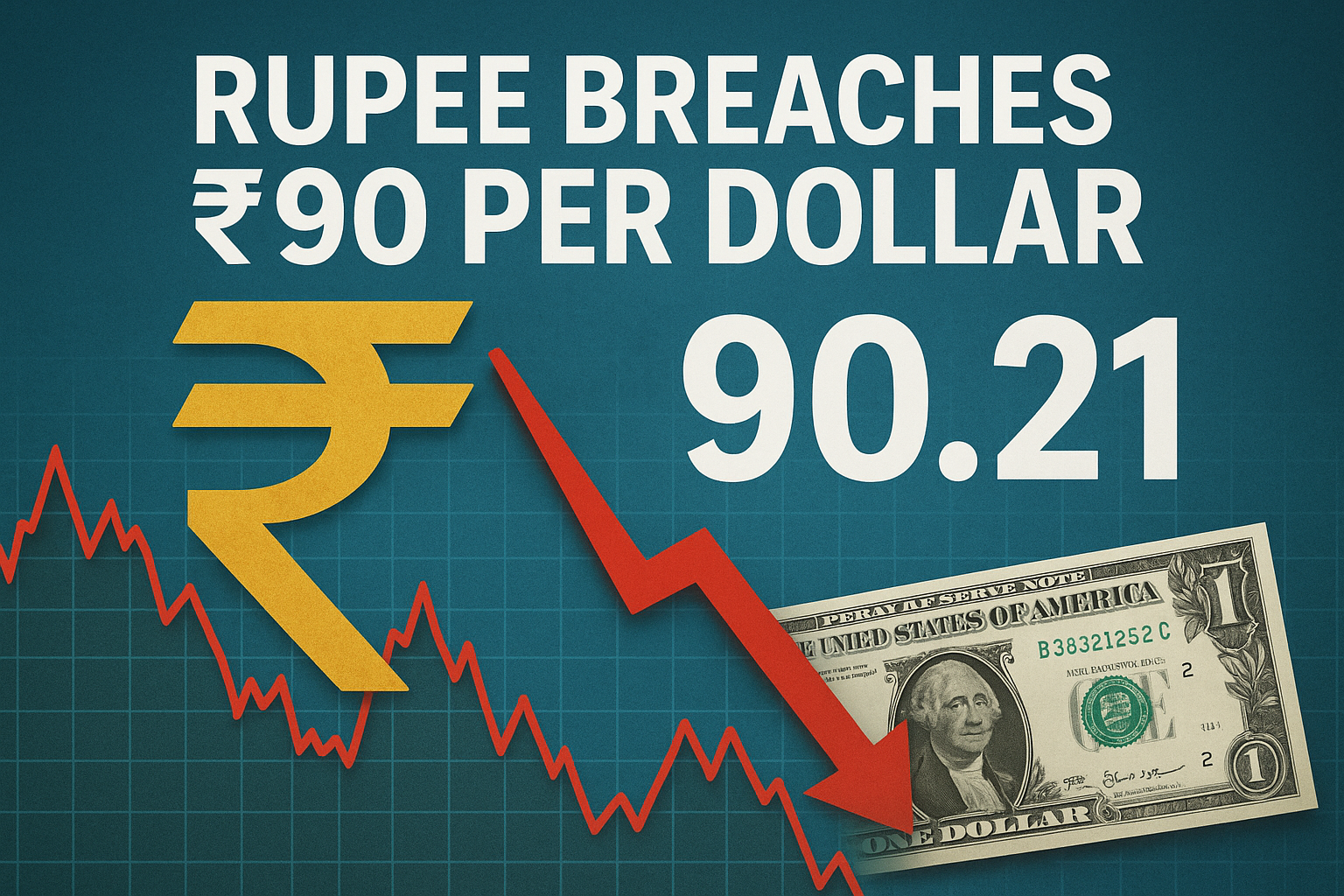
On 3 December 2025, the Indian Rupee hit a record low of ₹90.21 per US dollar, crossing the ₹90 mark for the first time.
-
The steep drop was driven by:
-
Massive foreign institutional investor (FII) outflows are putting pressure on the rupee.
-
Firm global crude oil prices — increasing India’s import bill, raising demand for dollars.
-
Ongoing uncertainty around the India–US trade deal, which weighed on market confidence and foreign investment sentiment.
-
-
Forex traders also pointed out a lack of visible intervention from the Reserve Bank of India (RBI) for much of the trading session, exacerbating the fall.
Is ₹90 the New Normal for Rupee?
According to some market experts (for instance, a senior fund executive), the ₹90-per-dollar level may now be considered the “new normal” for the rupee, given structural imbalances like higher domestic inflation relative to trade partners, lower productivity growth, and persistently weak capital flows.
They argue that unless fundamentals — such as trade deficit, capital inflows, and export competitiveness — shift appreciably in India’s favour, a sustained appreciation is unlikely.
What This Means for India — Impact & Consequences
✅ Exporters & Dollar-Earning Sectors Could Benefit
-
A weaker rupee makes Indian exports cheaper and more competitive globally, which can benefit industries exporting goods or services (like IT, textiles, etc.). Analysts expect exporters to get a boost as their dollar-denominated revenues now convert to more rupees.
⚠️ Importers, Consumers & Students Might Feel the Pinch
-
Imports (such as crude oil, electronics, machinery, raw materials) will become costlier — pushing up input costs for businesses, and eventually prices of goods and services for consumers.
-
For people planning foreign travel, overseas education, or remittances abroad, the cost in Indian rupees becomes significantly higher.
📈 Inflation & Cost of Living May Rise
-
Higher import costs (especially essential imports like fuel and raw materials) can feed into inflation, eroding purchasing power.
-
Businesses relying on imported components may have to pass on increased costs, affecting profits or increasing prices.
⚓ Forex Reserves and External Vulnerability
-
Persistent depreciation might strain forex reserves if the central bank intervenes heavily. Over time, reliance on dollar inflows (capital flows, exports, remittances) could make India vulnerable to global economic shocks.
How Should Different Stakeholders React?
| Stakeholder | What to Watch / Do |
|---|---|
| Export-oriented businesses / IT & services | Consider hedging currency risk; leverage export advantage for revenue growth. |
| Import-heavy industries | Evaluate cost structure, consider sourcing alternatives, and plan for higher input costs. |
| Consumers & households | Expect higher prices for imported goods/services; budget accordingly. |
| Students/travellers abroad | Re-assess budgets for education or travel; unfavourable exchange rate impacts. |
| Policymakers & RBI | Monitor capital flows, manage volatility, and consider measures to stabilise the rupee or curb inflation. |
Frequently Asked Questions (FAQ)
Q1. Why did the rupee cross ₹90 for the first time?
A1. The rupee slid past ₹90 because of a combination of sustained foreign institutional investor outflows, firm crude oil prices, increasing demand for dollars, and uncertainty over the India–US trade deal — all creating strong pressure on the rupee.
Q2. Does a weaker rupee always mean bad news for the economy?
A2. Not always. While depreciation raises import costs and inflation risk, it can boost exports by making Indian goods and services cheaper internationally, benefiting export-oriented sectors.
Q3. Will the rupee recover soon?
A3. Some experts believe that ₹90 per dollar may become the new normal unless structural factors change — such as improved capital inflows, narrowing trade deficit, or stronger export performance — because inflation, productivity, and trade dynamics are unfavourable.
Q4. How does this rupee fall affect ordinary citizens?
A4. Citizens may face higher prices on imported goods, inflation could rise, and for those planning overseas travel, studies or remittances, the cost in rupees will increase, making such plans more expensive.
Q5. Is there a chance that the Reserve Bank of India will intervene to defend the rupee?
A5. RBI historically steps in to manage volatility, but experts say it may not defend the rupee permanently if depreciation reflects structural imbalances. The current drop suggests the RBI allowed the rupee to find market-determined value, intervening only to limit extreme volatility.